Local guide / Salt Lake City, UT
Earthquakes and Water Heaters in Salt Lake City Homes
Most people think about falling bookshelves when they think about earthquakes. A 40 or 50 gallon tank of water that tips over and snaps its lines can do more damage to your house. Here is how to keep it standing.
Free to call. Lines open 24 hours.
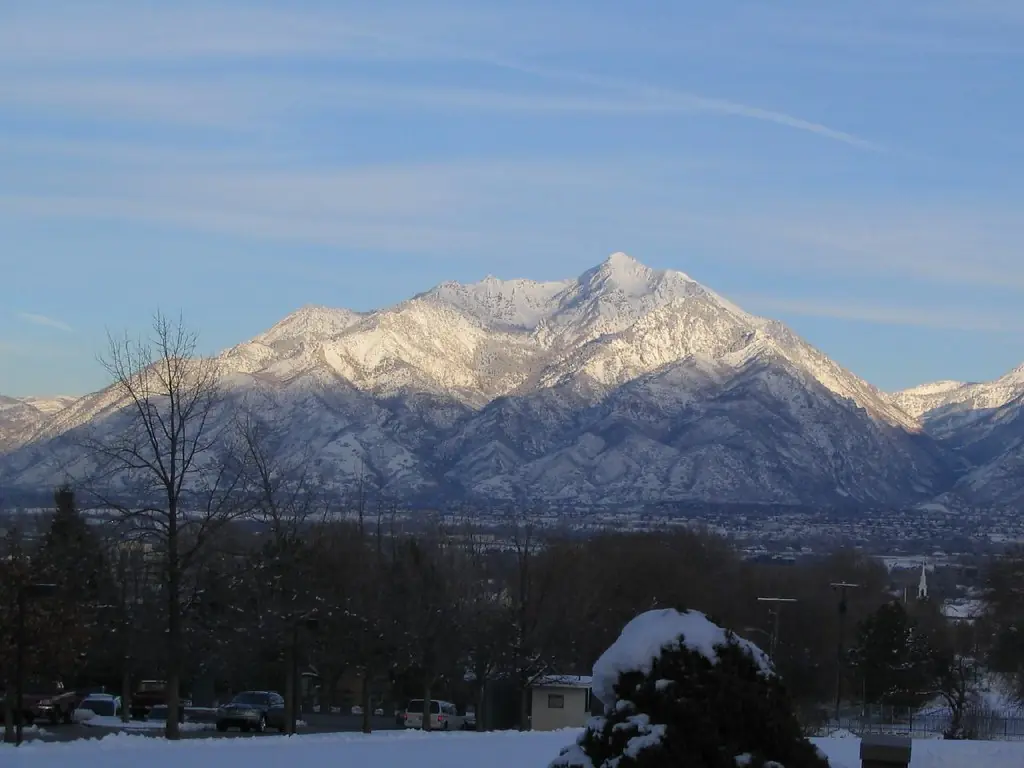
Photo: Wasatch Mountains from South Jordan, Utah by Ken Lund, CC BY-SA 2.0
Magna was the warm up
On March 18, 2020 at 7:09 a.m., a magnitude 5.7 earthquake hit just north of Magna. The University of Utah Seismograph Stations went on to locate 2,589 aftershocks through February 2021. Utah's earthquake program says the quake caused an estimated $62 million in building related damage, with no major injuries.
Bigger ones are possible. A 2016 USGS fact sheet on the Working Group on Utah Earthquake Probabilities put the chance of one or more magnitude 6.75 or larger earthquakes in the Wasatch Front region at 43 percent over the next 50 years, and the chance of a magnitude 6.0 or larger at 57 percent.
Why the water heater matters
A full water heater is heavy and top heavy, and it sits on a small base. Shaking can walk it across the floor or tip it over. When it moves, the rigid water pipes and gas line attached to the top get pulled apart.
Utah's earthquake program calls strapping your water heater one of the best non structural steps you can take, because a damaged water heater can cause fires, flooding and carbon monoxide build up. In a basement, a broken supply line keeps pouring water until somebody shuts the main off.
Water heater leak flooding your Salt Lake City basement? Call to reach a local restoration company.
Call (385) 513-0739Strap it and use flexible lines
Be Ready Utah's home hazard hunt says to secure the water heater, and any other gas appliance, to wall studs with sturdy earthquake straps, and to connect it to the gas supply with a flexible gas line. The state's earthquake program adds that the heater should have flexible water lines too. Strapping kits are sold at many hardware stores and are relatively cheap.
A few practical points:
- Into studs. Straps need to anchor into wall studs or masonry, not just drywall.
- Snug to the wall. A big gap behind the tank lets it build up speed before the strap catches it.
- Check the old ones. A thin strap put in decades ago may not hold a full tank. If in doubt, replace it.
If you are replacing the heater or redoing gas lines, the state's earthquake program suggests checking with your local building department about permits first.
Know your shutoffs before you need them
Be Ready Utah tells families to teach every responsible person how, when and where to turn off the main water, gas and electricity. Find your main water valve now and make sure it turns. Hunting for it with water on the floor is a bad way to learn where it is.
Gas is different. Be Ready Utah is blunt about it: after an earthquake, only shut off the gas if you see, hear or smell a leak. Keep a shutoff tool or adjustable wrench near the outside gas meter.
Insurance after a quake
Utah's earthquake program points out that earthquake damage is not covered by a standard homeowners or fire insurance policy, and suggests looking into earthquake insurance.
Water damage after a quake can get complicated, because the question becomes whether the loss counts as earthquake damage or as a sudden plumbing failure. Ask your agent now how your policy would treat a pipe that breaks in an earthquake. Do not guess.
If the basement is already wet
1. Shut off the main water valve to stop the flow. 2. If you smell gas, get everyone out of the house first and make the call from outside. 3. Keep out of standing water near outlets or appliances. 4. Take photos of the heater, the broken lines and the water before cleanup. 5. Call your insurance company.
Then dry it. The EPA says water damaged areas and items should be dried within 24 to 48 hours to prevent mold. Utah's dry air will not reach the water that wicked into drywall, carpet pad and the bottom of wall framing.
Sources
Where these facts come from
Checked 2026-10-31. Rules and phone numbers change, so confirm with the source before you rely on them.
Services
Water Damage Help in Salt Lake City
Water Damage Restoration
Extraction, structural drying, moisture logs and repairs.
Get help →EmergencyEmergency Water Removal
Standing water pumped and extracted, day or night.
Get help →EmergencyFlooded Basement Cleanup
Basement water pumped out, dried and checked.
Get help →EmergencyBurst Pipe Water Damage
Cleanup after frozen, split or leaking pipes.
Get help →EmergencySewage Backup Cleanup
Safe cleanup of sewer backups and toilet overflows.
Get help →Plan aheadMold Remediation
Mold found after a leak, removed and the cause fixed.
Get help →UrgentFire & Smoke Damage
Smoke, soot and firefighting water cleaned up.
Get help →UrgentRoof Leak & Storm Damage
Water through the roof, ceiling or windows after a storm.
Get help →More guides
More Salt Lake City Guides
Water in the House: Who to Call
Is it the city's problem or yours? A quick way to tell, the numbers to have, and what to do while you wait.
Read the guide →Spring Runoff and Flooding
A big snow year in the Wasatch is great for skiing and hard on creekside basements. How to check your risk, where to get sandbags, and what your insurance probably does not cover.
Read the guide →Mold After Water Damage
A musty smell weeks after a leak usually means something never fully dried. How big a problem it is, what you can handle yourself, and when to bring in help.
Read the guide →Call any time
Water Damage After a Leak or Quake?
Call any time to reach a local water damage restoration company in Salt Lake City.